
The Naira Redesign: The Nigerian Central Bank’s Move Towards a Cashless Society

Over Half of All Global Malaria Cases Occur in Sub-Saharan Africa: Causes and Solutions
December 16, 2022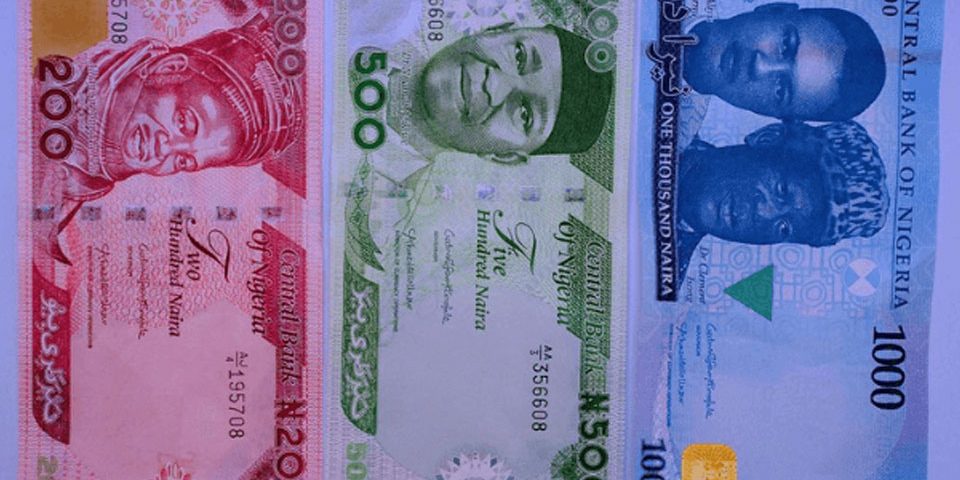
In October 2022, Godwin Emefiele, the governor of the Central Bank of Nigeria, announced the decision to issue new bank notes and demonetize the current ₦200, ₦500, and ₦1000 banknotes. By February 2023, many Nigerians will discover that their money has become worthless as a result of the change in monetary policy.
By the 31st of January 2023, the current banknotes will lose their legal tender status and become unusable. Until then, Nigerians can deposit cash into their bank accounts, after which they will be able to withdraw it in the form of new bank notes starting February.
The Central Bank of Nigeria gives several reasons for its decision to redesign the naira. First, it states that it will lead to a decrease of counterfeit money as the new bills are made with security features that make them difficult to counterfeit.
Second, governor Emefiele stated that the new bank notes will help the central bank achieve its monetary policy objectives. He mentions that the redesign is meant to reduce the “hoarding of banknotes by members of the public” and that over 85% of naira in circulation is held outside the vaults of commercial banks. He wants to change this, and claims that “The Central Bank of Nigeria is prepared to move towards a cashless economy.”
Emefiele also stated that the redesign and distribution of the new notes will help control inflation, make policies more effective, ensure financial inclusion, and fight corruption.
Following the news of the redesign, the naira fell against the dollar. At the time of writing the exchange rate stands at over ₦700 to $1 in Nigeria’s parallel market whilst the official rate is ₦445 to $1. The depreciation of the naira can be attributed to the reluctance of many Nigerians to deposit their money into bank accounts, as they would rather hold it in dollars. There are multiple reasons that explain this unwillingness to deposit naira.

Source: https://tradingeconomics.com/nigeria/currency
Firstly, the naira inflating at over 20% a year makes it an unappealing currency to hold, and few Nigerians actually hold naira for long durations of time. Governor Emefiele’s statement that members of the public are hoarding naira is therefore poorly-spoken. While a large share of the naira may be circulating outside of the banking system, few Nigerians are actually hoarding a currency that loses half of its value every four years. The naira is mostly used to transact.
Second, to realize the envisioned cashless society, the central bank governor has stated that he intends to restrict the volume of cash people can withdraw from their bank accounts. According to Emefiele, Nigerians who want to withdraw large volumes of cash “will have to fill uncountable forms” and that the central bank “will take your data, whether it is your BVN, your NIN so that enforcement agencies like EFCC or ICPC can follow you and be sure that you are taking that money for good purpose.” The restricted access and promised oversight make depositing naira into a bank account even less enticing for many Nigerians.
The above explains why people are rushing to convert their naira into dollars. The dollars inflation rate of about 8% is much lower than that of the naira, making it the better currency to hold. In addition, the dollar will soon be subject to much less restrictions and oversight than the naira, and therefore offer people more freedom and control over their money. However, there are a limited number of dollars circulating in Nigeria while demand is increasing, this drives the exchange rate up.
So why does the central bank want to move towards a cashless society? An important reason is that digitalizing money through programmes such as the eNaira allows the Central Bank and Nigerian government more oversight and control over the economy. When all transactions happen digitally within the banking system, counterfeiting of bank notes and illicit economic activities will be much harder to orchestrate. The digitalization of money will also increase tax revenue, as undeclared work often relies on transacting in cash.
Even though the move towards a cashless society will likely decrease criminality and increase tax revenue, many Nigerians might not like the idea of having limited access to their money and being subjected to oversight by the state. The fall of the Naira against the dollar following the announcement of the redesign certainly implies that Nigerians don’t like being forced to deposit their highly inflating money into bank accounts which they will soon have restricted access to.
As for Governor Emefiele’s claim that the distribution of new notes will control inflation, it may turn out to be so, but it will come at a cost. This is because part of any drop in inflation following the naira redesign will be caused by naira banknotes not being deposited to bank accounts in time, and as a result becoming worthless. When these naira bank notes lose their legal tender status, the total naira in circulation decreases, which could cause the inflation rate to go down.
The amount of money that will become worthless will likely turn out to be a lot. By 2021, only 45% of Nigerians had a bank account. It can therefore be expected that many Nigerians won’t deposit their bank notes, either because they don’t have an account, or because they were not informed of the redesign within the brief three-month period set out for the operation.
The short notice may even be part of the central bank’s strategy to reduce naira in circulation and thereby decrease inflation. According to Nigerian law, the central bank may give no less than three months’ notice before a currency redesign. Governor Emefiele and his colleagues decided to go with the minimum legal time period.
The Naira Redesign: The Nigerian Central Bank’s Move Towards a Cashless Society

 English
 Arabic
 English
 French
 German
 Hausa
Hausa Igbo
Igbo Portuguese
 Shona
Shona Spanish
 Swahili
 Yoruba
 Zulu
Zulu