
Should Africa Help Solve a Problem It did not Cause: Going Carbon-Net Zero

Over Half of All Global Malaria Cases Occur in Sub-Saharan Africa: Causes and Solutions
December 16, 2022
Global warming disproportionally affects African countries when compared to the vast majority of the world’s nations. At the same time Africa's contribution to global greenhouse gas emissions has accounted for only 3.4 percent and 3.8 percent over the last two decades.
In 2018, Africa’s 55 countries together emitted less carbon dioxide than Russia by itself. Almost three quarters of Africa’s emissions comes from just five countries: South Africa, Algeria, Nigeria, Egypt, and Morocco. This means that 50 African countries together emit less than one percent of global greenhouse gases.
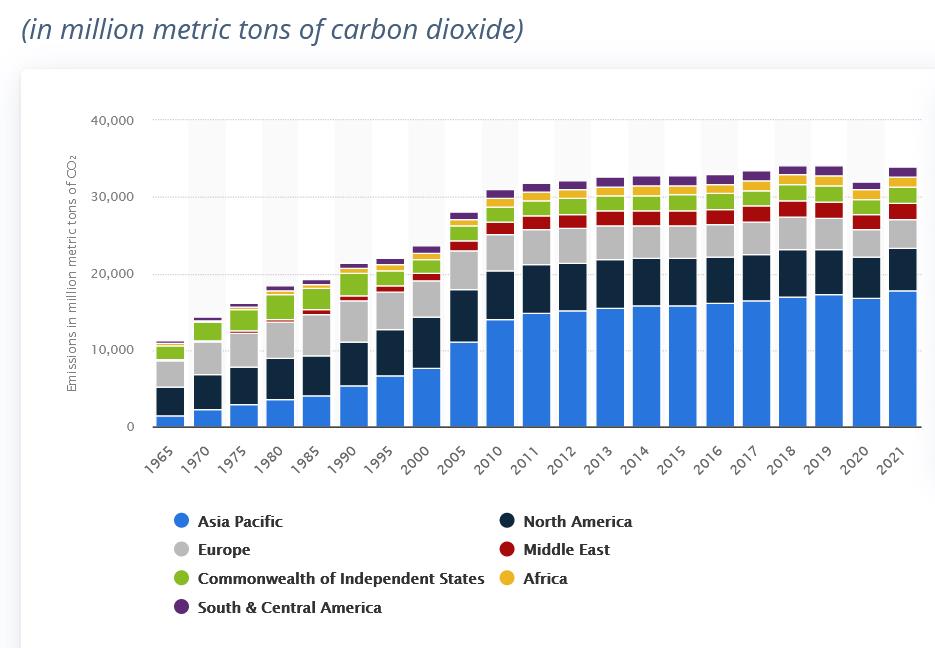
On average, Sub-Saharan Africans produce only around 0.8 tonnes of CO2 per year, compared to a global average of about 4.4 tonnes per person. Countries like Ethiopia, Mozambique, Tanzania, Mali, and Niger, have outputs ranging between 0.1 to 0.3 tonnes per person per year.
Africa has outliers such as South Africa’s 7.62 tonnes CO2 per person. However, African exceptions have similar per capita emissions as China and European countries, and still pale in comparison to the United States per capita emission of around 15 tonnes per person.
Taking this disparity into account, why should Africa participate in the clean energy transition? After all, burdening the world’s poorest nations with solving a problem they hold minimum responsibility for is simply not fair—African nations should not have to exert themselves to clean up the mess caused by others.
The world’s greatest economies were built on fossil fuels, yet when African nations want to develop, they must adhere to new rules and face restrictions to their growth?
The argument for Africa to not concern herself with the clean energy transition is certainly compelling. On the other hand, a strong argument can be made that Africa transitioning from fossil fuels is crucial not only for the world, but also for the continent itself.
Even though African emissions are still low, the CO2 output per person has been growing quickly. From 1950 to 2016, Africa’s CO2 emissions increased by a factor of 14. Population growth, increases in income, and urbanization are amongst the causes. These trends are still continuing. For example, Africa’s population of about 1.3 billion people is projected to grow to 2.8 billion people by 2060.
If nothing is done, Africa’s total CO2 output would in a few decades rival the U.S.’s emissions of today. The continent would be a major polluter and negate much of the world’s efforts to limit climate change.
A neglectful Africa would only be contributing to its own demise. Global warming, even if limited to below 2 degrees Celsius, impacts agricultural production and access to food in many African countries. Draughts in southern and central Africa, and flooding in east Africa, would reduce crop production by as much as 10 percent. This could have serious repercussions when taking into account the continent’s growing population.
Fortunately, transitioning to clean energy does not preclude economic growth. Green energy is becoming increasingly cheap. Between 2009 and 2019, for example, the cost of solar panels and onshore wind is down by 81 percent and 46 percent respectively.
Solar energy in particular is a major opportunity for Africa, as the continent is home to 60% of the places with the longest sun hours globally. Installing panels in these places will generate cheap and abundant power. Some African countries are already generating much of their energy in sustainable ways, such as Morocco, which in 2021 produced 37% of its electricity from renewable energy.
A transition to clean energy would create millions of jobs as solar panels need to be installed and wind turbines constructed. There lies a role for the international community in assisting Africa with the energy transition, as it is in the interest of the whole world to prevent the continent from becoming the next major polluter.
Over Half of All Global Malaria Cases Occur in Sub-Saharan Africa: Causes and Solutions

 English
 Arabic
 English
 French
 German
 Hausa
Hausa Igbo
Igbo Portuguese
 Shona
Shona Spanish
 Swahili
 Yoruba
 Zulu
Zulu