
Developing Northern Nigeria: The Key to National Prosperity

Over Half of All Global Malaria Cases Occur in Sub-Saharan Africa: Causes and Solutions
December 16, 2022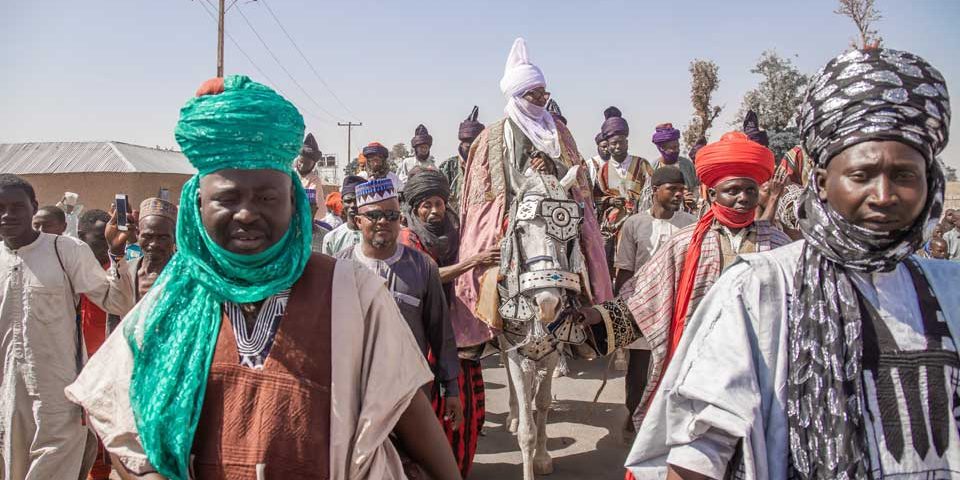
In my mind there were always two Nigeria’s, one of which I did not dare visit. People always told me that the north was unsafe, and that going there might get me kidnapped or killed. I took these warnings to heart and never left the south. However, I am becoming more and more convinced that the key to Nigeria’s future lies in the north.
It was never like this. As a British protectorate, Northern Nigeria spanned from Kogi state to Borno and Sokoto, covering 660,000 square kilometres and had a diverse and dynamic economy. The region was known for its agricultural output as it produced cotton, peanuts, cocoa and grain in large quantities. In addition to agricultural products, the protectorate exported livestock and textiles.
Among the first signs of the north’s decline was the 1953 Kano Riot. The clashes over politics between northerners and southerners sowed seeds of division which grew over the years that followed.
When Nigeria gained independence in 1960, the north was still doing well economically, and many migrated from the south to work there. The Kaduna Peugeot assembly plant in the north, for example, employed 2000 people and produced 90,000 cars per annum. Decline had already set in however, and migration and exchange between the north and south reduced over the following decades.
Besides insecurity, poverty is also a problem widely experienced in Nigeria’s northern provinces. In 2019, the average poverty headcount in the Northern regions was 59.8%, while the southern average was 25.3%.
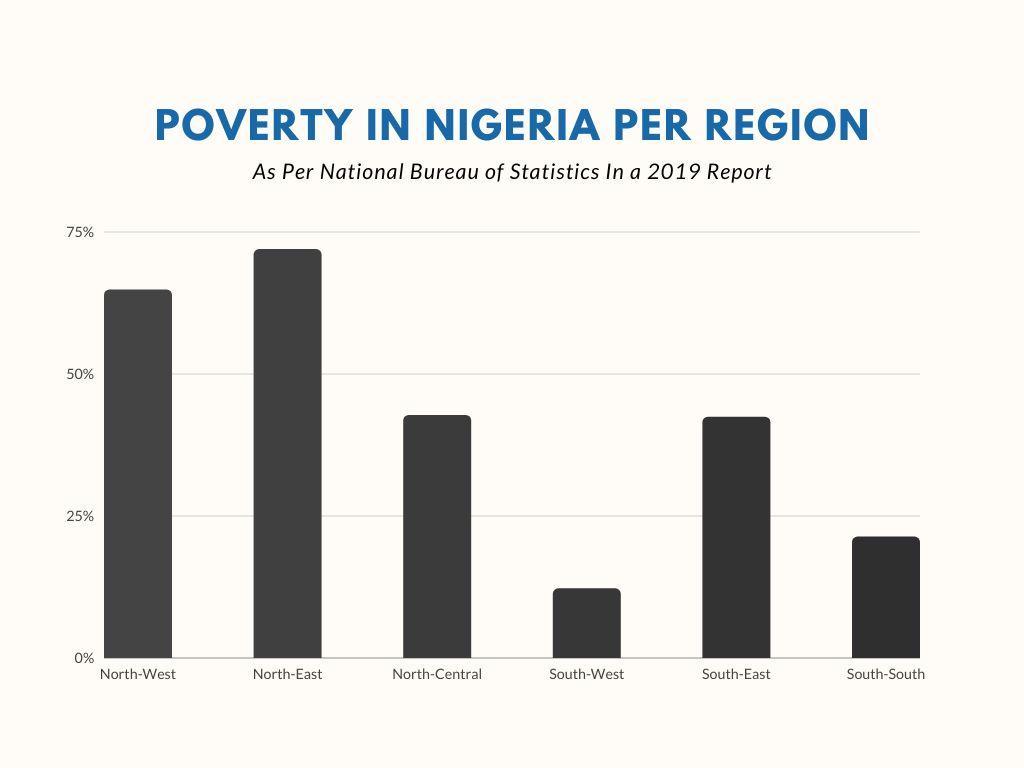
We also see a large difference in economic output between north and south. While three states in Southern Nigeria produce 36% of GDP, 19 northern states combined account for only 23% of GDP.
There is no consensus on the causes of the large economic disparity between north and south, but differences in education are likely among the reasons. Historically, western education was not embraced by the emirs of northern Nigeria, while leaders in the south were more open to it.
Solely having access to traditional Islamic education resulted in northerners being at a competitive disadvantage with Southerners when it comes to accessing work opportunities.
While northerners now enjoy much greater access to western education, the effects of historic differences in education have not subsided yet. In 2019, only 34% of Northern Nigerians were literate, compared to 67% of southerners.
Instability in Northern Nigeria also affects the economy. Terrorist groups like Boko Haram and The Islamic State's West Africa Province (ISWAP) as well as criminal bands of kidnappers and robbers roam Nigeria’s northern provinces. The presence of these dissidents and the resulting lack of safety deters investors from deploying capital to the region. This lack of security represses entrepreneurial initiative, adding to the factors that perpetuate poverty.
Corruption is another nefarious activity plaguing Nigeria’s northern provinces. While the north has the most states and local governments, and therefore receives the largest resources from the Federal Government every year, much of the money is pocketed by those closest to the inflows. As a result, funds for initiatives meant to reduce poverty are stolen.
While the above problems are certainly serious, we should focus on looking ahead by thinking of solutions and of the benefits solving Northern Nigeria’s problems will bring.
The north is resource rich and home to much fertile land. Gold, tin, columbite, nickel, and uranium are present in the region. Even oil is present there, as in November 2022, President Muhammadu Buhari announced the discovery of the north’s first crude oil field. The exploitation of these natural resources will benefit the whole nation. The proceeds, if invested well, will help lift Nigerians out of poverty.
The north also has great potential for agricultural development. It already is the food basket of Nigeria. Through mechanization and innovation, the northern provinces could supply many countries with produce at a time of global food insecurity.
Many African and Middle Eastern countries import much of their food from Russia and Ukraine. As a result of the war, supply lines have been in jeopardy. Russia has blocked food shipments from Ukraine, causing shortages in multiple countries. Nigeria is well positioned, with its abundance of fertile land, to sell food to countries in need of a reliable trading partner.
To procure investments in resource extraction and agricultural development, safety in the north must be improved. Infrastructure must be built to facilitate export. Importantly, the justice system must become more efficacious in prosecuting corrupt individuals. This will help ensure that any gains realized will not end up in the hands of corrupt officials and businessmen.
All these measures take economic leadership and time and effort, but developing the north will be of major benefit to all of Nigeria.
Developing Northern Nigeria: The Key to National Prosperity

 English
 Arabic
 English
 French
 German
 Hausa
Hausa Igbo
Igbo Portuguese
 Shona
Shona Spanish
 Swahili
 Yoruba
 Zulu
Zulu