
The African Union’s Role in Resolving the Ethiopia-Tigray Conflict

The Rwandan Renaissance: Paul Kagame’s Success Story
January 27, 2023
Shifting Alliances in Kenyan Politics: The Stories of President William Ruto and Raila Odinga
January 31, 2023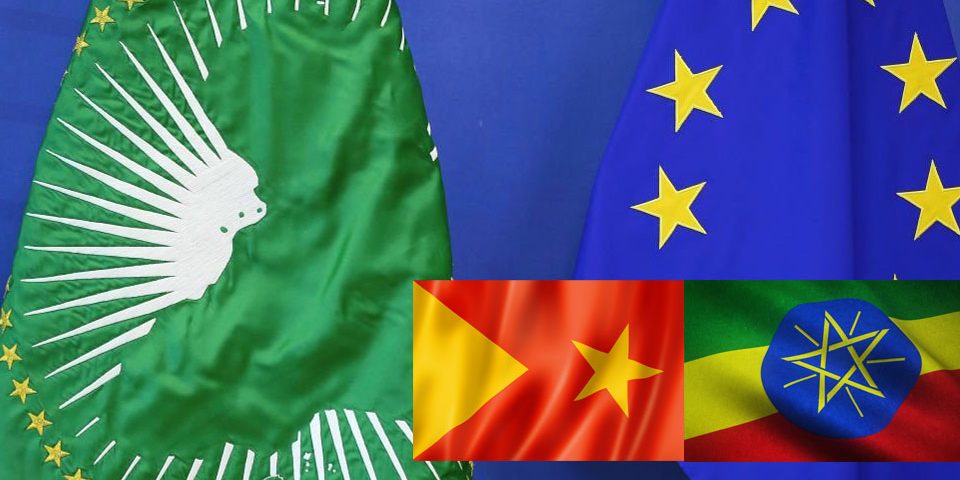
In November of 2022, after nearly two years of war, the Ethiopian government and leaders representing the country’s Tigray regional state signed an agreement to end hostilities. The African Union’s (AU) role in monitoring the peace process was celebrated after the news broke. The peace process did, however, not progress smoothly, and the praise may be misplaced.
The start of the Ethiopia-Tigray conflict can be traced back to the shift in power that followed Ethiopian Prime Minister Abiy Ahmed’s rise to prominence. Following his election in 2018, he pulled power away from The Tigray People's Liberation Front (TPLF), which had dominated Ethiopian politics for decades.
Over the following years, tensions rose, and in November 2020, TPLF forces attacked an Ethiopian military base, starting the hot conflict.
During the fighting, the Ethiopian government suspended the Tigray region's electricity, internet, telecommunications, and banking services. It blocked access to the region, preventing humanitarian aid from reaching Tigray’s seven million inhabitants. This caused hundreds of thousands of Tigrayans to starve.
The Ethiopian government points to a locust infestation being the cause of the food crisis and states that there already were food shortages before the Ethiopian civil war began. U.N. officials, however, have referred to the situation as being man-made and named the blockade as the root cause of the problem. This has prompted the Ethiopian government to retaliate by arresting and expelling as many as a hundred U.N. staff and affiliated personnel from the country in retaliation.
Following the retribution, during a U.N Security Council meeting, Ethiopia's ambassador Taye Selassie accused U.N staff of creating a false narrative to further its interests and of being partial to the Tigrayan People’s Liberation Front.
The African Union did not fare much better in its involvement in the crisis. The organization’s Peace and Security Council only met four times to discuss the conflict and booked little progress until November 2022’s peace negotiations.
The AU’s difficulty in facilitating a peace process can partly be explained by the Tigray People’s Liberation Front’s position regarding the organization and its primary representative. In a statement, the TPLF expressed worries regarding the relationship of the African Union’s representative with Ethiopian Prime Minister Abiy Ahmed.
The man in question, Olusegun Obasanjo, is a former Nigerian president who was named the African Union’s High Representative to the Horn of Africa.
Obasanjo’s call to involve Eritrea in mediation efforts met with criticism from the TPLF. Eritrean troops have supported the Ethiopian government in fighting the Tigray People’s Liberation Front and reportedly took part in some of the most violent conflicts. For this reason, many Tigrayans deemed Obasanjo’s call to involve them in the negotiations a distasteful proposal.
In addition, the African Union naming Obasanjo as the organization's representative may not have been the most sensible choice.
The TPLF requested that former Kenyan President Uhuru Kenyatta take Obasanjo’s position as African Union representative but was denied. In addition, the Tigrayan's wish for a process mediated by multiple countries and organizations, including the U.S., EU, UAE, UN, and AU, with the latter acting as a facilitator instead of taking a pivotal role, was also not granted.
On the other hand, the Ethiopian government preferred the African Union’s sole involvement over a multi-organization process, expressing that “any peace initiative should be within the AU framework anchored on the principle of African solutions to African problems.”
The matter of which parties should be involved in peace talks contributed to the slow negotiation's progress. But, all the while, people were dying in the Tigray region as conflict and famine continued unabated.
The eventual signing of a peace agreement in November 2022, facilitated by the AU, is undoubtedly good news. However, a critical observer may not name it as being among the African Union’s best achievements.
First, it is likely that the Tigray People’s Liberation Front was subject to much pressure to sign the agreement on account of the man-made starvation taking lives every day they delayed the act.
Second, the peace agreement should have followed a peace process that included mutually agreed upon mediators and parties.
The Rwandan Renaissance: Paul Kagame’s Success Story

 English
 Arabic
 English
 French
 German
 Hausa
Hausa Igbo
Igbo Portuguese
 Shona
Shona Spanish
 Swahili
 Yoruba
 Zulu
Zulu