
Low Africa Credit Ratings: The State of African Economies

Increasing Mobility in Africa: Volkswagen’s Strategy in Rwanda
January 21, 2023
Morocco’s Performance in The World Cup: The Power of Harnessing African Unity
January 21, 2023
During the 2010s, when money was easy to borrow, African economies were growing across the board. Eager to accelerate further growth, governments indebted themselves with the best intentions.
All good times come to an end, however, something which is doubly true in the domain of economics. And sure enough, in 2019, the pandemic heralded in a time of harsher economic conditions globally. Now, many African countries are stuck with large debts and slower economic growth than expected.
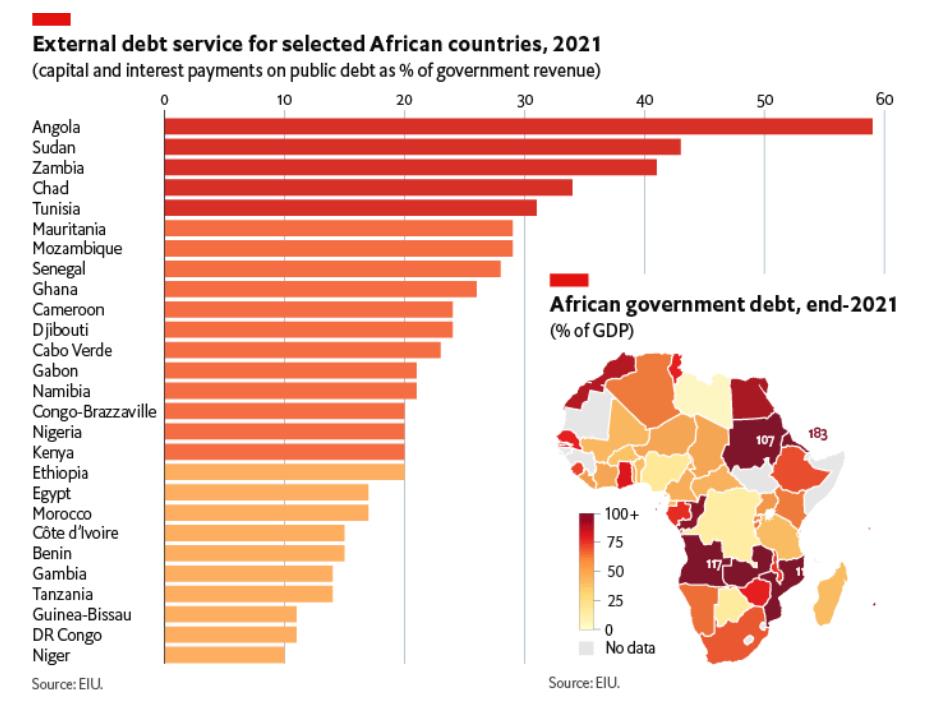
Total external debt in Africa exceeded U.S. $1 trillion in 2021, with annual servicing costs reaching a record high of $100 billion. The high debt burden hampers the ability of African governments to allocate funds to economic and social development programs.
The Economist Intelligence Unit (EIU), a credit rating agency, gave African countries historically low ratings in their most recent country risk service analyses. These sovereign ratings are predictions about the risk involved in lending to countries, including assessing the borrower’s ability and willingness to repay loans.

A number of factors are considered by credit rating agencies when calculating scores. These include political and institutional stability, rule of law, macroeconomic policies, GDP growth, and public and private foreign debt. Taking these metrics into account, the agencies use a rating system, typically ranging between AAA for countries expected to honour obligations and D for countries most likely to default.
Examples of the EIU’s most recent Africa credit ratings include CCC- for Angola, B.B.- for South Africa, and B- for Nigeria. The credit rating agency, known to rate lower than most other agencies (50% of their ratings were lower than those of the leading agencies, 5% higher and 45% the same) rated virtually no African country above B, the exemption being Botswana which was rated A-.
The reasons behind the EIU’s low Africa credit ratings are various. Importantly, economic growth prospects are not deemed favourable due to the retraction of the global economy. This limits African countries’ access to the resources required to stimulate their economies.
The European Central Bank and U.S. Federal Reserve, for example, are hiking their interest rates to combat inflation; this prohibits African countries from borrowing from these institutions on favourable terms.
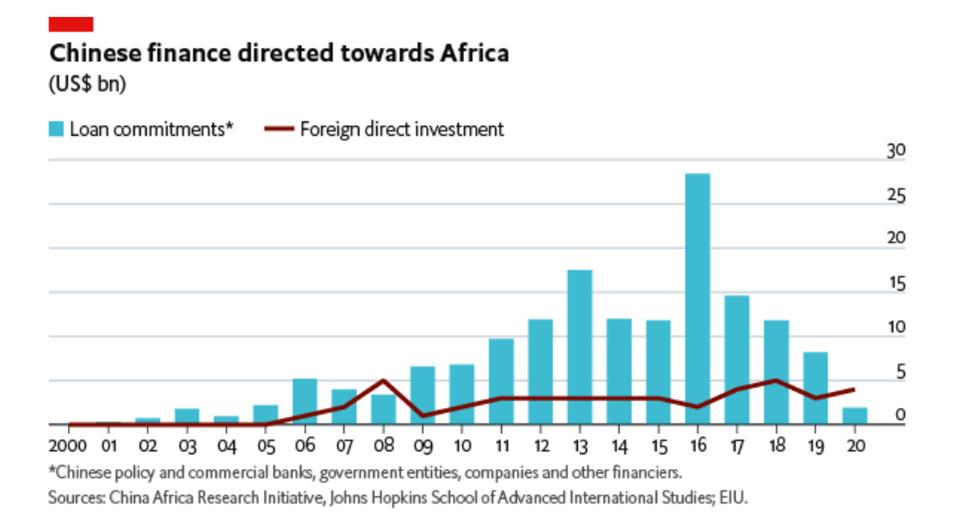
Chinese capital too, is being deployed to a decreasing extent over recent years as the country is becoming increasingly risk averse. This results from the Chinese economy being negatively affected by problems that include Covid, an unstable real estate market, and a semiconductor war with the U.S.
Besides limited access to capital, economic growth is also negatively affected by the supply-chain disruptions and inflationary pressures caused by the pandemic and the war in Ukraine. As such, African countries are unlikely to offset external debt pressures by increasing their national GDP.
In addition, ongoing conflicts on the African continent, and other security concerns, are bringing down the sovereign credit score of many countries. Indeed, it is easy to imagine the reluctance of creditors to extend loans to countries with governments that could be replaced at any time, or which are engulfed in violent conflict.
The low credit ratings of African countries are further influenced by the ending of debt relief agreements granted by the G20 Debt Service Suspension Initiative (DSSI), established in the aftermath of the pandemic, and managed by the World Bank and the International Monetary Fund. Having been exempt from debt obligations for over a year, many African countries will have to service millions of dollars owed in the years to come.
African countries must improve their sovereign credit scores to secure loans and attract investments.
One domain in which great strides can be made is security, a metric which holds substantial weight in the rating processes. The EIU grading of Botswana relatively high, for example, was justified in part by referring to the peaceful country and the lack of threats to sovereignty. By strengthening their security apparatuses African governments can expect to improve their credit scores.
In addition, African governments should nurture a favourable investment climate, particularly regarding sectors investors perceive as lucrative. For example, African energy, natural resources, agriculture, construction, and real estate sectors can be made more accessible to international investors.
In economics, a boom can be expected to follow a bust. The EIU has already stated that it does not anticipate a systemic debt crisis in Africa. Nonetheless, many African governments will have to spend frugally over the coming years to prevent a slide into economic disarray.
Low Africa Credit Ratings: The State of African Economies

 English
 Arabic
 English
 French
 German
 Hausa
Hausa Igbo
Igbo Portuguese
 Shona
Shona Spanish
 Swahili
 Yoruba
 Zulu
Zulu